
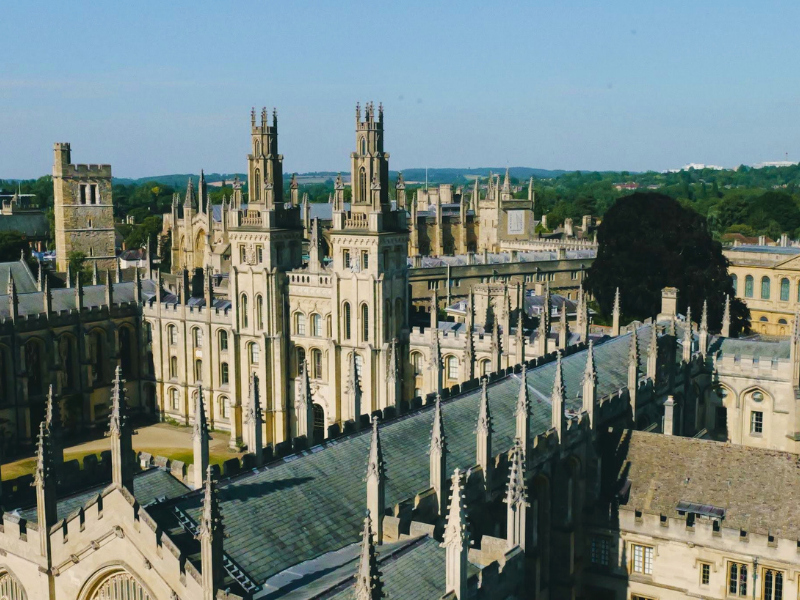
One of the things that makes Oxford special is its collegiate system. Rather than one large campus, the University comprises 43 individual colleges, each with its own history, architecture, traditions, and community. Some date back nearly 800 years. Others were founded centuries later, reflecting the evolution of thought on education, science, and the changing world.
The colleges contain multitudes. Beyond beautiful historic buildings, they are where much of university life happens: students live, share meals, study, meet friends, and take part in the daily rhythms of Oxford. Spend even a little time in the city and you’ll begin to notice how each college has its own character.
For Oxford Academia students, two of these colleges become especially familiar: Corpus Christi College and University College. Both offer a wonderful introduction to Oxford’s history and traditions, but each has a story of its own.
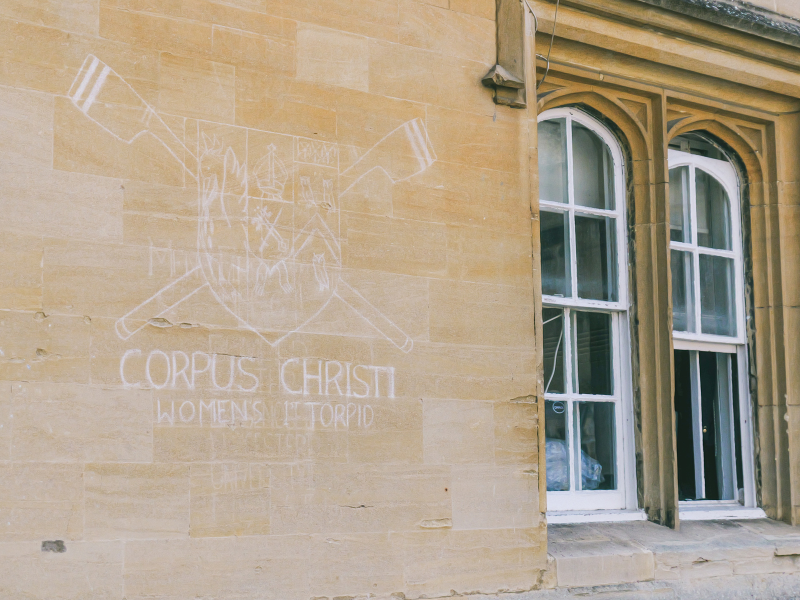
Corpus Christi College: Five Centuries of Curiosity
Founded in 1517 by Richard Fox, Bishop of Winchester, Corpus Christi College, often simply called “Corpus,” was established during the Renaissance, a period of renewed interest in classical learning, literature, languages, and the sciences. Fox envisioned a place where students could engage deeply with these subjects, an ambitious idea for its time.
More than 500 years later, that history is still very much part of the college. The Front Quadrangle, with its Tudor architecture, has changed remarkably little over the centuries. Around it, the Hall, Chapel, and original library offer a glimpse into the traditions that have shaped college life for generations. Built when Corpus was founded and where much of the King James Bible was translated, the library is still in use today. It’s not every day you get to spend time in a space that has been serving students for more than five centuries!
The college continues to evolve. The modern Spencer Building, opened in 2024, adds a contemporary library and study space alongside the historic buildings. It’s a vivid reflection of Oxford writ large: a place where centuries of academic tradition sit alongside new ideas and ways of learning.
Corpus is one of Oxford’s smaller colleges, giving it a particularly close-knit feel. Its courtyards and shared spaces offer locales to meet friends between activities or take a quiet moment after a busy morning. The dining hall, built in 1516, is another central part of college life, where students come together over meals and conversations often carry on well beyond the day’s seminars. Just off Merton Street and a short walk from Christ Church Meadow, Corpus offers a quieter corner of the city while keeping students within easy reach of Oxford’s museums, libraries, and lively streets.
For Oxford Academia students staying at Corpus, these historic spaces are the setting for everyday life: waking up in a college dorm, heading to a seminar classroom, meeting friends in the courtyard, and returning in the evening to share stories from the day.
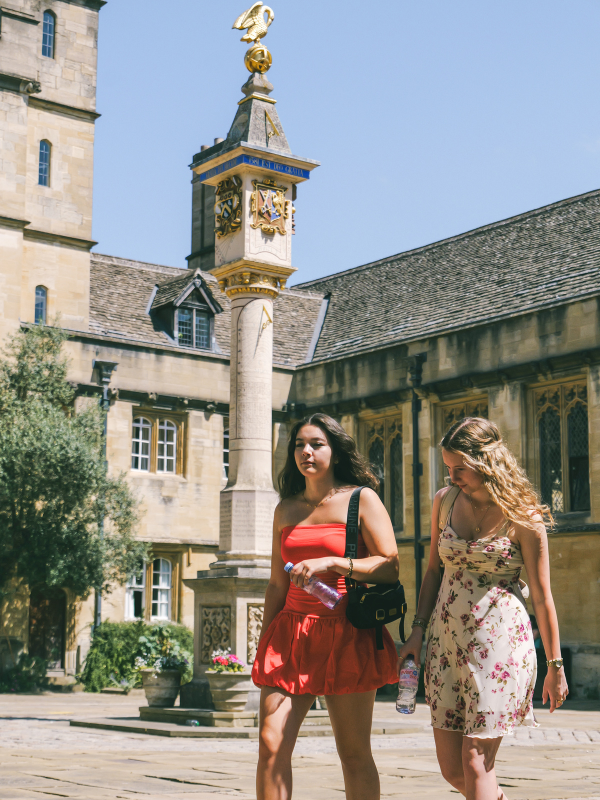
University College: Nearly 800 Years at the Heart of Oxford
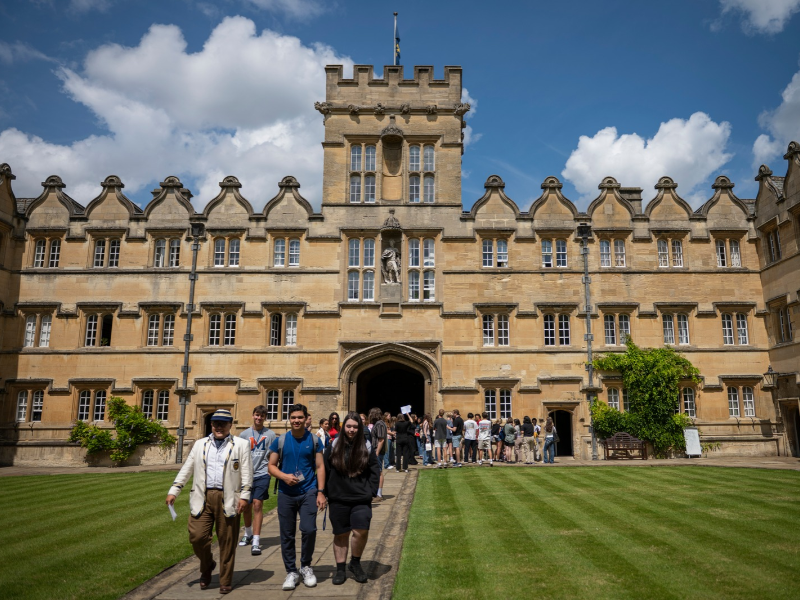
University College, often called “Univ” by students and locals, traces its origins to a bequest made by William of Durham in 1249, giving it one of the strongest claims to being Oxford’s oldest college. Its long history is visible throughout its buildings, from the grand Main Quadrangle to the elegant Radcliffe Quad.
Construction of the Main Quadrangle began in 1634, but was interrupted by the English Civil War and wasn’t completed until 1676. Radcliffe Quad followed in the early 18th century, funded by a bequest from Dr. John Radcliffe, a former student whose name is now familiar throughout Oxford. He also funded the nearby Radcliffe Camera, one of the city’s most recognizable landmarks.
Univ has been home to generations of notable thinkers and writers, including philosopher John Locke and poet Percy Bysshe Shelley. Its position on the High Street also puts students right in the middle of Oxford life, with the Bodleian Libraries, Radcliffe Camera, University Church of St. Mary the Virgin, and Ashmolean Museum all a short walk away.
That central location makes the college a natural starting point for exploring the city. Students can step outside and find themselves among Oxford’s historic streets, visit a museum, or take a walk past some of the university’s most familiar landmarks before returning to the college. Days often move between a morning seminar, an afternoon exploring the city, and dinner back at the college, where there’s time to catch up with friends and continue conversations from the day.
Like Corpus, Univ offers our students the chance to experience the rhythms of college life firsthand. Over the course of the program, even the small routines begin to feel familiar: recognizing the porters at the main gate, knowing the quickest route to a favorite lunch spot, or finding your way around the surrounding streets without checking your phone.
Learning Beyond the College Gates
Of course, a summer in Oxford isn’t spent entirely within the college walls. The city itself is an important part of the academic experience. Small seminar groups give students the chance to ask questions, exchange ideas, and explore a subject more deeply alongside other curious students. Learning also extends beyond seminars through visits around the city, meetings with experts, and guest lectures from distinguished academics and scholars.
And while the colleges provide the setting for much of daily life, Oxford Academia’s Student Deans and Residential Life staff are there throughout the program, living in the residences with students, offering support, and helping the community come together.
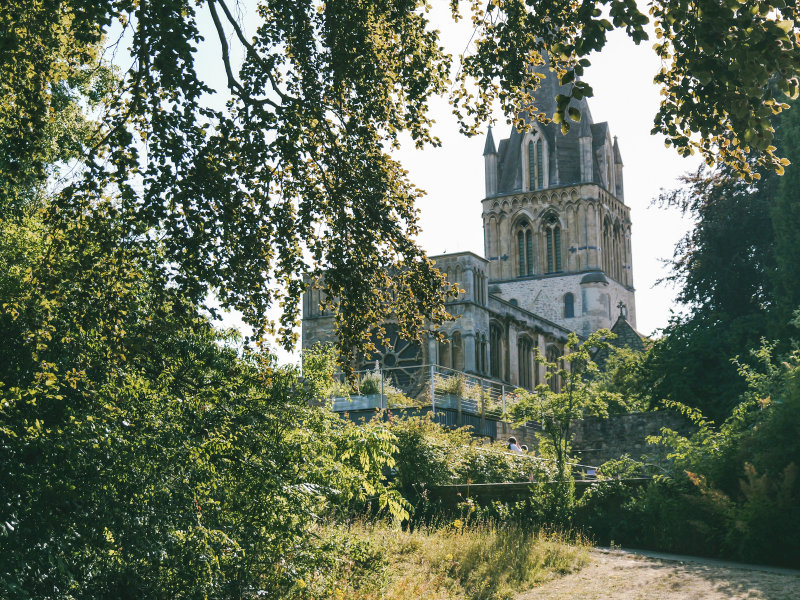
A Summer in the Heart of Oxford
Corpus Christi and University College offer two different perspectives on Oxford. Corpus brings students close to the Renaissance revival of the university, while Univ’s longevity and central location offer a window into centuries of academic and cultural life.
But what makes these colleges especially meaningful for Oxford Academia students is not merely their age or architecture. It’s the opportunity to spend time in the same places where generations of students have themselves lived, studied, debated, and discovered.
For a few weeks, Oxford becomes more than somewhere to visit. It’s where students wake up, head to seminars, share meals, explore new interests, and take in a city that has learning deep in its DNA. Along the way, the colleges begin to feel less like historic landmarks and more like home.
To learn more about our Oxford Academia programs in Oxford click here.